
24/7 Support Centerinfo@sunspike.net
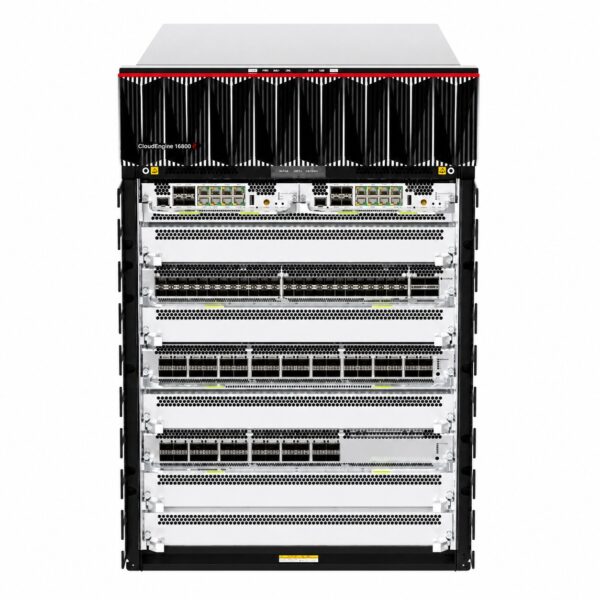
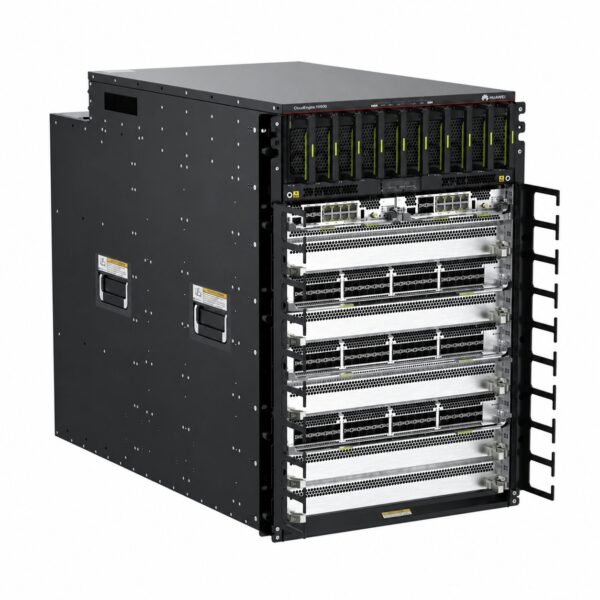
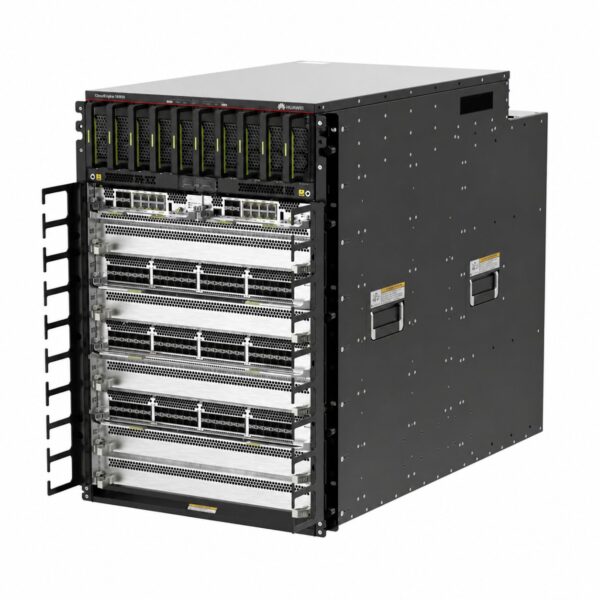
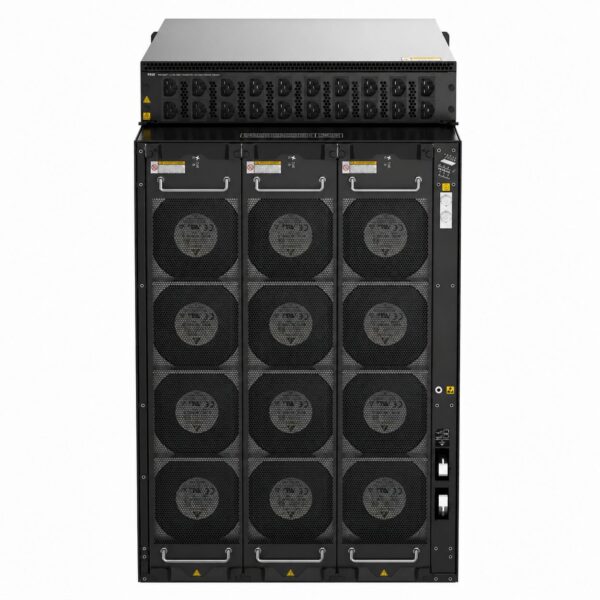
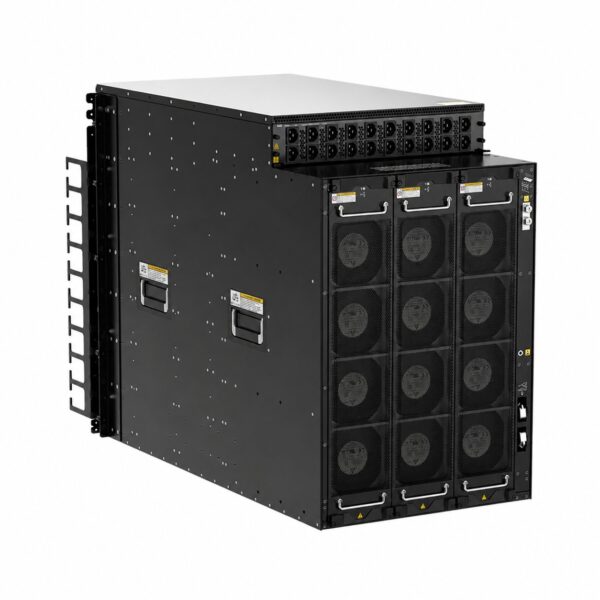
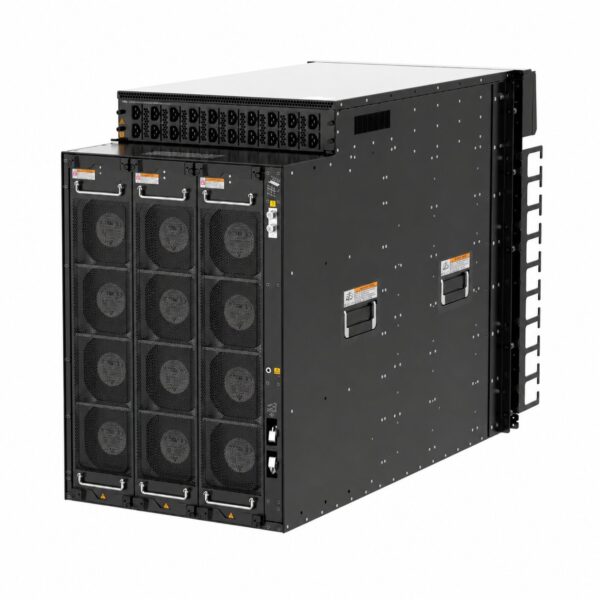
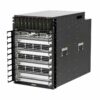
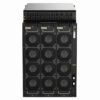
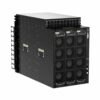
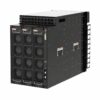
Huawei CloudEngine S16700-8
S16700-8
Enterprise stock · tested · export documentation available
Huawei CloudEngine S16700-8 – Product Information
Product Overview
The Huawei CloudEngine S16700-8 is a next-generation flagship modular core switch designed for high-end campus networks in the fully-wireless era. As part of the CloudEngine S16700 series, this switch is engineered for high-quality 10 Gbps campus networks, delivering record-high performance with ultra-fast forwarding capability of 14.4 Tbit/s per slot.
The S16700-8 features a backplane-free orthogonal Clos architecture, where Main Processing Units (MPUs) are separated from Switch Fabric Units (SFUs), greatly improving system bandwidth and evolution capabilities. This architecture enables the device capacity to be smoothly expanded to several hundreds of Tbit/s, meeting the requirements for smooth network evolution.
The switch is the first in the campus networking space to apply Multichassis Link Aggregation Group (M-LAG) technology, achieving 99.9999% high reliability. It supports ultra-high-density 10GE/40GE/100GE/200GE/400GE full-rate access ports, providing customers with a simplified architecture for rapidly building campus networks.
Key features include VXLAN L2 and L3 gateways, centralized and distributed gateways, BGP-EVPN, iPCA (Packet Conservation Algorithm for Internet) quality awareness, one-click service deployment, and minute-level fault locating. The switch uses Huawei’s next-generation converged software platform with fully programmable switching chips, eliminating the need to replace hardware during service upgrades. Key components such as MPUs, power modules, and fan modules adopt a redundancy design to provide carrier-class reliability.
With 8 service slots, the S16700-8 supports up to 50,000 users and 100,000 terminals on a single device, delivering 30% larger capacity and ready for evolution over the next 10 years.
Technical Specifications
| Parameter | CloudEngine S16700-8 |
|---|---|
| Performance | |
| Switching Capacity | 76.8 Tbit/s / 2170–6988 Tbps |
| Forwarding Performance | 28,800 Mpps / 35,520 Mpps / 460,800 Mpps |
| Bandwidth per Service Slot | 14.4 Tbit/s |
| Chassis & Slots | |
| MPU Slots | 2 |
| Service Card (LPU) Slots | 8 |
| SFU Slots | 6 (expandable to 9) / 9* |
| Fan Slots | 3 |
| Port Density (Maximum) | |
| GE Ports | Up to 384 |
| 10GE Ports | Up to 384 |
| 25GE Ports | Up to 384 |
| 40GE Ports | Up to 288 |
| 100GE Ports | Up to 288 |
| 400GE Ports | Up to 144 |
| Physical Specifications | |
| Dimensions (H × W × D) | 703 × 442 × 874 mm |
| Weight (without packaging) | 129.8 kg (286.16 lb) |
| Weight (full configuration) | 253.1 kg (557.99 lb) |
| Power | |
| Maximum Power Consumption | 8260W |
| Environment | |
| Noise (Normal Temperature) | 47 dB(A) |
| Software Features | |
| iPCA (Quality Awareness) | Collection of real-time statistics on the number of lost packets and packet loss ratio at network and device levels |
| VXLAN | VXLAN L2 and L3 gateways; centralized and distributed gateways; BGP-EVPN; configured through NETCONF protocol |
| Reliability | LACP, VRRP and BFD for VRRP, BFD for BGP/IS-IS/OSPF/static routes, Eth-OAM 802.3ah and 802.1ag, Smart Link |
| Interoperability | VBST (compatible with PVST, PVST+, and RPVST), LNP (similar to DTP), VCMP (similar to VTP) |
| VLAN | Supports 4K VLANs; Access, Trunk, Hybrid modes; LNP link type auto-negotiation; default VLAN; VLAN switching; QinQ and enhanced flexible QinQ; VLAN Stacking and VLAN mapping; MAC-based dynamic VLAN assignment |
| MAC Address Table | Supports MAC address auto-learning and aging; static, dynamic, and blackhole MAC entries; source MAC address filtering; port-based and VLAN-based MAC management |
| Architecture | |
| Architecture Type | Backplane-free orthogonal Clos architecture |
| SFU Configuration | 4 independent SFUs |
Related products
-
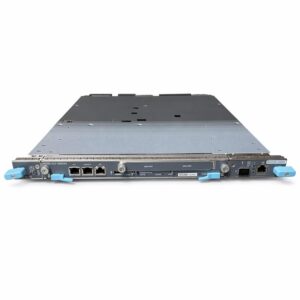
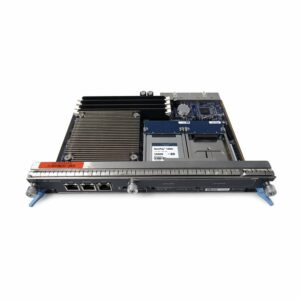
Juniper SRX5K-SCBE Enhanced Switch Control Board with SRX5K-RE-1800X4-B
Juniper SRX5K-RE-1800X4 Routing Engine for SRX5400, SRX5600, & SRX5800
-
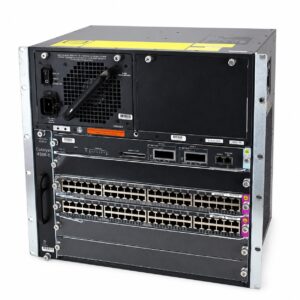
Cisco Catalyst 4506-E
WS-C4506-E
-
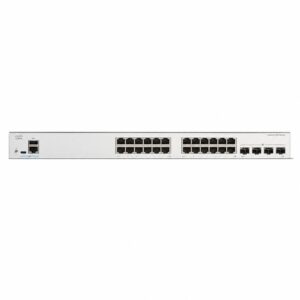
Cisco Catalyst C1300-24T-4G
C1300-24T-4G
-
Cisco Catalyst 6509-E
WS-C6509-E
Reviews
There are no reviews yet.