
24/7 Support Centerinfo@sunspike.net
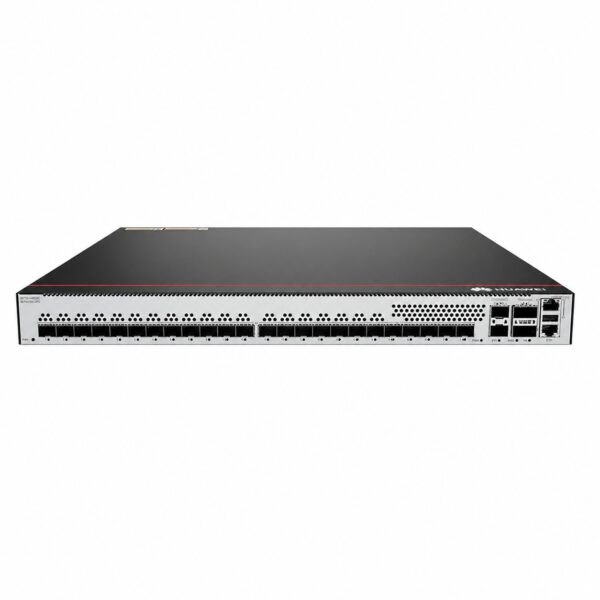
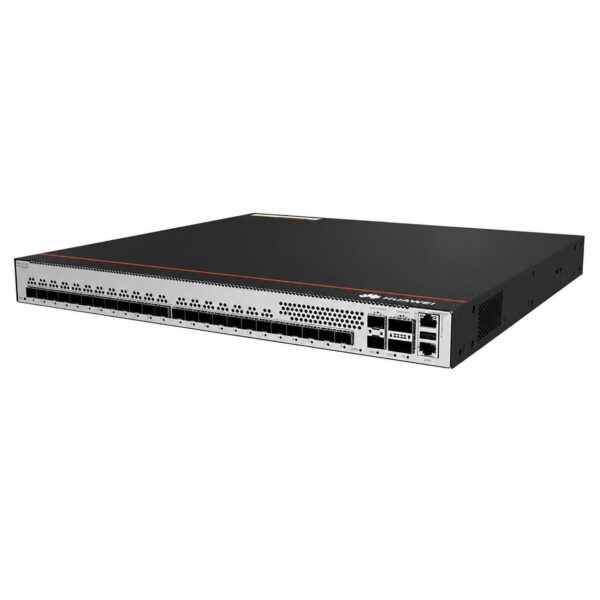
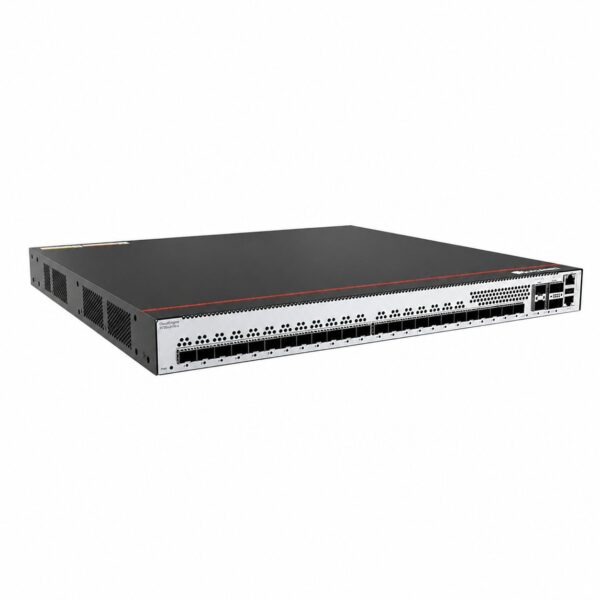
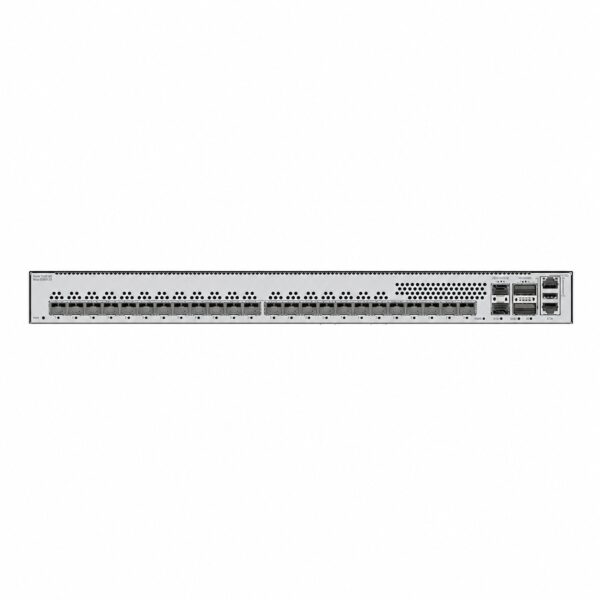
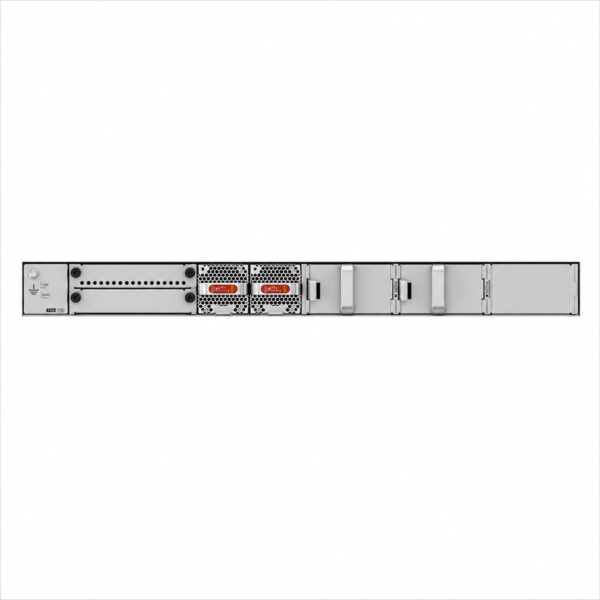
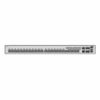
Huawei CloudEngine S6750-S16X10Y2CZ
S6750-S16X10Y2CZ
Enterprise stock · tested · export documentation available
Huawei CloudEngine S6750-S16X10Y2CZ – Product Documentation
Product Overview
The Huawei CloudEngine S6750-S16X10Y2CZ is a next-generation enterprise-class core and aggregation switch within the CloudEngine S6750-S series. Designed for campus networks, it delivers high performance, high reliability, cloud-based management, and intelligent operations and maintenance (O&M).
Built on Huawei’s industry-leading software and hardware platform, the switch is purpose-built with security, Internet of Things (IoT), and cloud networking in mind. It supports advanced technologies including free mobility, VXLAN, SRv6, and network slicing, enabling consistent user experience regardless of user location or IP address.
The S6750-S16X10Y2CZ offers a rich combination of optical port types — including 10GE SFP+, 25GE SFP28, and 40/100GE QSFP28 ports — to meet diversified network bandwidth requirements. It supports VXLAN-based network virtualization, allowing a single physical network to carry multiple services, thereby reducing deployment and O&M costs. All ports support MACsec, enabling end-to-end MACsec encryption for enhanced network security.
The switch is widely deployed at the aggregation layer of large campus networks or at the core layer of small and medium-sized campus networks across various industries, including transportation, manufacturing, and education.
Technical Specifications
| Category | Specification |
|---|---|
| Product Model | CloudEngine S6750-S16X10Y2CZ |
| Fixed Ports | 16 x 10GE SFP+ ports + 10 x 25GE SFP28 ports + 2 x 40GE/100GE QSFP28 ports |
| Expansion Slots | One extended slot / Two expansion slots |
| Forwarding Performance | 450 Mpps |
| Switching Capacity | 1.42 Tbps / 2.32 Tbps (device/system) |
| MAC Features | MAC address auto-learning and aging; Static, dynamic, and blackhole MAC address entries; Packet filtering based on source MAC addresses; MAC address learning limiting based on ports and VLANs |
| VXLAN Features | Distributed and centralized VXLAN gateways; BGP EVPN; VXLAN configuration through NETCONF; VXLAN route switching |
| iPCA Quality Awareness | Direct marking of service packets to obtain real-time statistics about dropped packets and packet loss rate; Measurement of dropped packets and packet loss rate on Layer 2/Layer 3 devices and networks |
| QoS | Traffic classification based on information from the link layer to the application layer; Complete queue scheduling and congestion control algorithms; Accurate multi-level scheduling for data flows; Hardware-based low-latency QoS queues for multicast packets |
| Interoperability | VBST (compatible with PVST/PVST+/RPVST); LNP (similar to DTP); VCMP (similar to VTP) |
| Power Supply Type | 1+1 backup (dual pluggable power modules) |
| Typical Power Consumption | 30% traffic under ATIS standard with dual power modules: 120 W (with two 180 W AC power modules) / 109 W (with two 240 W DC power modules) |
| Static Power Consumption | 66 W |
| Maximum Power Consumption | 291 W |
| Input Voltage | AC input (600W AC): 100V AC ~ 240V AC; 50/60Hz; High-voltage DC input (600W AC): 240V DC; DC input (1000W DC) |
| Heat Dissipation | Air cooling with intelligent fan speed adjustment |
| Dimensions (W x D x H) | 442.0 x 420.0 x 43.6 mm (1U) |
| Weight | 7.65 kg – 9.2 kg |
| Long-term Operating Temperature | –5°C to +45°C (23°F to 113°F) at an altitude of 0 to 1800 m (0 to 5905.44 ft.) |
| Short-term Operating Temperature | –5°C to +50°C (23°F to 122°F) at an altitude of 0 to 1800 m (0 to 5905.44 ft.) |
Related products
-
Cisco Nexus 2224TP Fabric Extender (N2K-C2224TP)
N2K-C2224TP
-
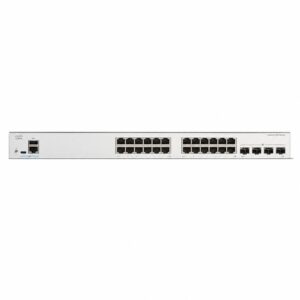
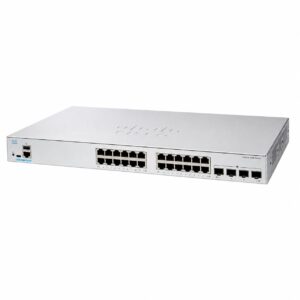
Cisco Catalyst C1300-24T-4G
C1300-24T-4G
-
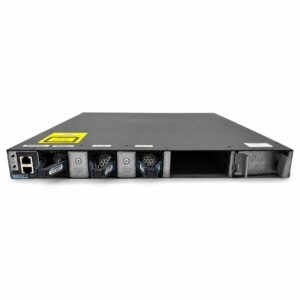
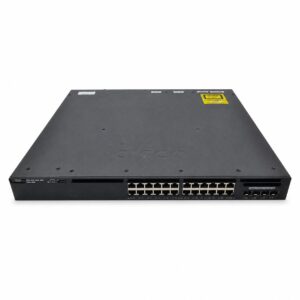
Cisco Catalyst WS-C3850-24T-S
WS-C3850-24T-S
-
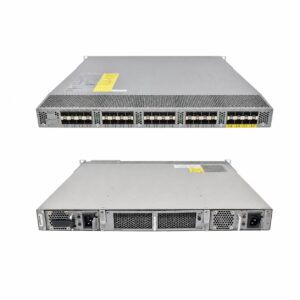
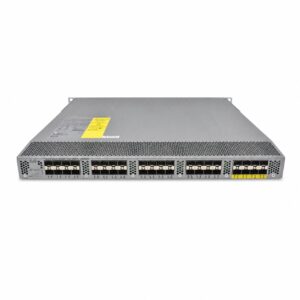
Cisco Nexus 2232PP 10GE Fabric Extender (N2K-C2232PP)
N2K-C2232PP
Reviews
There are no reviews yet.